
Related Posts Plugin for WordPress, Blogger...

The Bugs In Your Gut - Could They Cause Obesity or Diabetes?

>> Friday, December 30, 2016


Did you know that you have more bacterial cells inside your intestines than you have human cells in your entire body?  Not only that, but they house somewhere between 250 to 800 times more genes than we have human genes in our body.   Perhaps it's not so far out, then, for us to learn that these bacteria (called the 'microbiome') play an important role in our metabolism, and are very likely to contribute to the risk of both obesity and type 2 diabetes.

A wonderful Viewpoint article in JAMA (free to read online here) outlines what we know about this topic so far.

The microbiome has many important functions, including the production of important amino acids (protein building blocks) and vitamins, and they also help to degrade toxins.  The genes in these bacteria also produce hormones and inflammatory molecules that enter our circulation and effect our health.

These bacteria also play a role in how many calories we absorb from food, because they make enzymes that help us to digest polysaccharides, a type of carbohydrate.  Some types of gut bacteria are better at this than others, and studies have shown that people with obesity carry more of the carb-digesting bacteria (called Firmicutes) than people without obesity.  Interestingly, some studies have shown that when a person with obesity loses weight, particularly after bariatric surgery, the proportion of 'good' bacteria (called Bacterioides) increases relative to the 'bad' Firmicutes. Overall, the studies suggest that the gut bacteria may be both a cause and a consequence of obesity.

Along with the increased capacity to absorb carbs in people who carry more Firmicutes bacteria, so comes an increased risk of having not only obesity, but also type 2 diabetes.  Altered production of short chain fatty acids by gut bacteria, as well as low grade gut inflammation caused by chemicals made by the microbiome, also contribute to insulin resistance and diabetes risk.

So how does this play out in terms of treatment of obesity or diabetes? Well, some studies (mostly done in rodents, but some in humans too) have shown that manipulation of the gut microbiome by way of stool transplants (yep, transplanting poo), or perhaps by other modalities such as change in diet or probiotics, may be able to have an effect on the type of bacteria we have, but we are far from developing concrete treatment approaches.   However, as we learn more about our gut bugs and the genes they carry, we come steps closer to learning how we may ultimately be able to incorporate microbiome modification into our treatment options for obesity and metabolic syndrome.


Follow me on twitter! @drsuepedersen

www.drsue.ca © 2017

Read more...

New Canadian Diabetes Association Clinical Practice Guidelines Update

>> Saturday, December 3, 2016


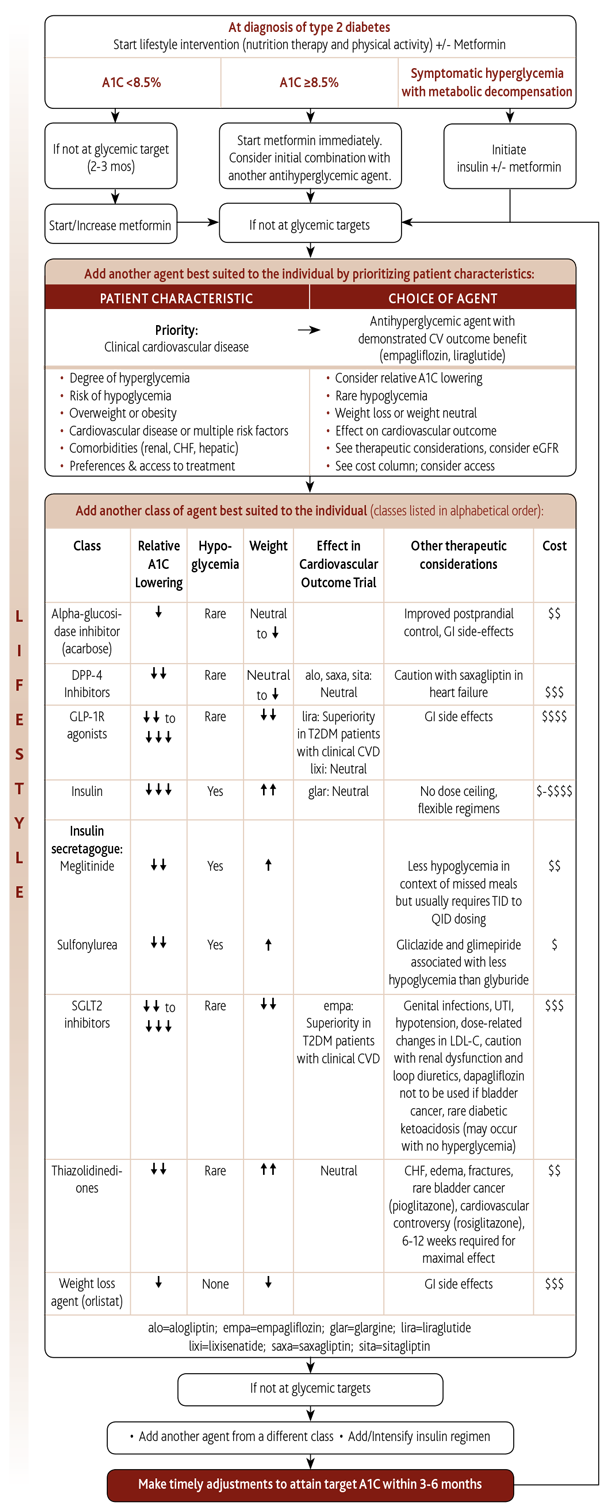
While the full Canadian Diabetes Association (CDA) Clinical Practice Guidelines are formally updated every 5 years (with the next edition due in 2018), interim updates are published if new evidence emerges that is considered to be practice changing.  As such, the CDA has just released an interim update with revised recommendations, in light of the new cardiovascular outcome trial of a diabetes medication called liraglutide.

As blogged previously, in people with type 2 diabetes who were at high risk of cardiovascular disease, the liraglutide cardiovascular trial (called the LEADER trial) demonstrated that liraglutide reduced the risk of cardiovascular events by 13%.  Put another way: if 66 people are treated for 3 years with liraglutide, one cardiovascular event would be prevented.

In the LEADER trial, 81% of patients had a past history of established cardiovascular disease, while 19% of patients did not (but they were still considered to be at high risk of CV events due to their risk factors).  Subgroup analyses suggested that it was patients who had a history of established cardiovascular disease who had the reduction in risk with liraglutide. As patients had to be age 50 or older to be included in the study, we do not know if these findings apply to a younger population.

In the revised CDA Guidelines, liraglutide now joins another medication called empagliflozin, as medications to consider after metformin, in patients with type 2 diabetes and established cardiovascular disease, who are not at target blood sugar control.  As ongoing cardiovascular outcome trials of diabetes medications are completed and published, the CDA Guidelines will be updated accordingly.

I have pasted the new algorithm below, but the resolution isn't great - it's a little friendlier on the eyes here.


Disclaimer: I am a member of the Expert Committee for the writing of the Canadian Diabetes Association 2018 Clinical Practice Guidelines. 


Follow me on twitter! @drsuepedersen

www.drsue.ca © 2016

Read more...

Reality Check on Coconut Oil

>> Friday, November 25, 2016


In today's marketplace, it seems that we are constantly being presented with the next great thing - a way of eating, a food product, or a supplement, promising health benefits ranging from better skin to weight loss to a longer, healthier life.   Because marketers are so slick, it is often really tough to figure out which claims are true, and which are an inflated or completely false version of reality.

Coconut oil is an example of a very successful marketing engine that has tirelessly promoted the its benefits, to the point where it seems almost commonly accepted that coconut oil is a healthy choice.

Coconut oil is an oil that is extracted from the nut of the coconut palm tree.  Coconut oil is actually one of the least healthy oils you can eat, because it is almost purely saturated fat - it contains even more saturated fat than lard.   Overall, studies show that saturated fat consumption is associated with an increased risk of heart disease.


(Sidebar: While studies overall have suggested that saturated fat is associated with an increased risk of heart disease, this has recently come into question with recovery of data from Minnesota Coronary Experiment in the 1960s.   What is quite clear (from much more recent studies) is that replacing saturated fat with carbohydrates (ie a low fat, high carb diet) does not reduce heart risk.  In fact, eating excess carbs as a replacement for saturated fat actually increases the risk of diabetes, weight gain and metabolic syndrome. Conversely, replacing saturated fat with polyunsaturated fat in your diet can confer substantial health benefits, possibly including a reduction in cardiovascular events and mortality - read recent studies about this here and here.)


So why has coconut oil been touted as a 'healthy' fat?  Here are some of the health claims that have been made:


1. Health Claim: Medium chain fatty acids (contained in coconut oil) may not raise bad cholesterol (LDL) as much as long chain fatty acids (found in other oils) do.

Reality check:  This is highly controversial, with conflicting results in the small studies that have been done.  There is also very little study of the effect of coconut oil on heart health, which is why we we care about LDL in the first place.  Contrast this with extra virgin olive oil, which has been shown as part of a randomized clinical trial to reduce the risk of cardiovascular disease.


2.  Health Claim: Fatty acids in coconut oil (medium chain) may not be as readily stored in fat tissue as long chain fatty acids.

Reality check: Whether or not this is true, adding additional fat to your diet should be avoided - coconut oil still contains 117 calories per tablespoon (this is about 10% of the total calories for a whole day for a typical woman trying to lose weight).


3.  Health Claim: Coconut oil can improve Alzheimer's disease and/or dementia.

Reality check:  This claim started with a YouTube clip that went viral in 2012, showing a patient with Alzheimer's who dramatically improved with eating coconut oil.  This case was never confirmed or reported in any medical or scientific literature, and there is no clinical trial data to substantiate or refute this claim.


THE BOTTOM LINE:   Avoid adding extra fat to your diet.  When you do use fats or oils for cooking, monounsaturated or polyunsaturated fats are a better choice than saturated fat (eg extra virgin olive oil and canola oil).  Coconut oil is not the way to go.


Follow me on twitter! @drsuepedersen
www.drsue.ca © 2016

Read more...

Risks of Overweight and Underweight Before Pregnancy

>> Monday, November 21, 2016


Doing one's best to achieve an appropriate amount of weight gain in pregnancy is important for best health outcomes for baby and mother.  As it turns out, mom's weight before pregnancy is an important predictor of birth outcomes as well.

A recent review summarizes available data on this issue, looking at 60 studies involving over 1.3 million women.

They found that for women with overweight or obesity before pregnancy, compared to women with normal weight, the risks were as follows:

  • 45% higher risk of having a large for gestational age baby
  • 24% higher risk of having a small for gestational age baby
  • 29% higher risk of the newborn baby needing admission to intensive care after birth
  • 27% higher risk of stillbirth

For women with underweight before pregnancy: (again, compared to women with normal weight)
  • 30% higher risk of preterm birth
  • 67% higher risk of having a small for gestational age baby


These data remind us of the importance of managing weight as well as possible not only during pregnancy, but also before consideration of pregnancy. 

Recommended weight gain during pregnancy is based on pre-pregnancy Body Mass Index, and can be calculated using Health Canada's handy Pregnancy Weight Gain Calculator. 


Follow me on twitter! @drsuepedersen

www.drsue.ca © 2016

Read more...

Could Diet Drinks Be Sabotaging Your Weight Loss Efforts?

>> Saturday, November 12, 2016


We know that consumption of beverages containing sugar increases the risk of obesity, metabolic syndrome, and type 2 diabetes, so it is often advised to consume diet drinks instead.  However, it has been suggested that even diet beverages may be associated with an increased risk of type 2 diabetes.  As such, a recent study studied the effect of diet beverages vs water as part of a weight management program in women with overweight or obesity and type 2 diabetes.

The study, published in Diabetes, Obesity & Metabolism, randomized 81 women who were habitual consumers of diet beverages, to consume either water after lunch five times per week instead of her usual diet drink, or to continue to drink diet beverages after lunch, during a 6 month weight loss program which consisted of dietary modifications and exercise.

They found that women who switched up diet drinks to water had a 1.2kg greater decrease in body weight compared to women who continued to drink diet beverages, as well as greater improvements in fasting blood sugar, fasting insulin levels, and post meal blood sugars.

While the differences in the study were small, it is interesting to consider how diet drinks could be detrimental to weight loss efforts.  It has been proposed that artificial sweeteners may raise the hedonic desire for sweet, energy dense foods. The women drinking diet beverages did consume a few more calories per day than those drinking water, so this may be a plausible mechanism of the differences seen in this study.  There may also be an effect of sweeteners on gut bacteria, which we are learning have an important impact on energy balance and metabolic homeostasis.

It should also be noted that there is conflict in the research in this area, with other studies showing no effect on weight between water vs diet beverages or even a benefit of diet beverages over water.


However, based on the current study, it seems that water may be best.


Follow me on twitter! @drsuepedersen

www.drsue.ca © 2016

Read more...

Do Calcium Supplements Increase The Risk Of Heart Disease?

>> Sunday, November 6, 2016


Calcium is a nutrient that is essential for bone health.  While adequate calcium intake is recommended for maintaining bone health, some studies have suggested that calcium supplements may increase the risk of heart attack.  It seems that these fears may not have been warranted after all: the most recent review of existing literature suggests that recommended levels of calcium intake are NOT associated with cardiovascular risk in generally healthy adults.

The data on calcium supplements and heart disease risk was recently assessed in systematic review and meta-analysis done by the American National Osteoporosis Foundation, and published as a joint position statement with the American Society for Preventive Cardiology.  Published in the Annals of Internal Medicine, they found that calcium intake from either food or supplement sources at levels within the recommended tolerable upper intake range in USA of 2000-2500 mg/day are not associated with cardiovascular disease risk in generally healthy adults.

They do recommend that wherever possible, recommended intake of calcium should be obtained through natural food sources rather than supplements, but that supplements can be used safely when food sources do not meet goals.  One of the theories behind the benefits of getting calcium through real food is that absorption of calcium occurs more gradually from the intestinal tract, whereas absorption of calcium from supplements may be faster, resulting in more of a ‘spike’ of calcium in the blood.


The authors note that the available data to answer this question about calcium supplements and cardiovascular health is not the best, as none of the studies looked at cardiovascular endpoints are the primary outcome.  This type of study is unlikely ever to be done, as it would be very costly and likely need to be very large to detect small differences.  In the absence of such data, the currently available data suggests that calcium supplements are a safe approach to reach recommended calcium intake, in situations where calcium intake from real food is insufficient.

Follow me on twitter! @drsuepedersen

www.drsue.ca © 2016

Read more...

Pregnancy After Bariatric Surgery - How Long Should You Wait?

>> Saturday, October 22, 2016


After bariatric surgery, it is recommended to wait at least 12-18 months (with some guidelines recommending to wait two full years) before considering pregnancy.  This is because rapid weight loss and a higher risk for nutritional deficiencies occurs during this phase, which may be a poor environment for fetal development. However, a recent study suggests that waiting two years may not be enough.

The study, published in JAMA Surgery, looked at data from women and their infants in Washington state who had had bariatric surgery (n=1859), and compared them to women and their infants who had not had bariatric surgery (n=8437).  They found that babies who were born to mothers who had had bariatric surgery had a 57% higher risk of prematurity, 25% higher risk of needing to be admitted to the NICU, 93% higher risk of being small for gestational age.

However, when 4 years or more had elapsed since bariatric surgery, the risk of these outcomes was lower when compared to women where 2 years or less had elapsed.  Specifically, the risk for babies born less than 2 years after bariatric surgery was 48% higher for prematurity and 54% higher for NICU admission, compared to babies born to mothers where 4 years or more had elapsed (the difference for being small for gestational age was not significant). For babies born in the 2-4 year window after bariatric surgery, the authors note that the prevalence of prematurity and NICU admission was not meaningfully different from babies born to women who had not had bariatric surgery.

So how do we interpret these data? Well, we already knew that the risks identified in this study exist for babies born to mothers after bariatric surgery, but we need to remember that there are benefits to pregnancy outcomes after bariatric surgery as well - for example, less babies born large for gestational age, less labor and delivery complications, lower risk of C section birth, lower risk of gestational diabetes and high blood pressure in pregnancy.  However, based on these data, it may be better to wait even longer than two years after bariatric surgery before conceiving.


Follow me on twitter! @drsuepedersen

www.drsue.ca © 2016

Read more...

  © Blogger templates Palm by Ourblogtemplates.com 2008

Back to TOP